Summary:
“To Autumn” is one of John Keats’ most celebrated odes, written in 1819. The poem is an ode to the season of autumn, portraying it as a time of abundance, ripeness, and preparation for the end of the year. Keats describes autumn as a gentle and patient force, working in harmony with nature to bring a bountiful harvest. The poem is divided into three stanzas, each focusing on different aspects of the season—its richness, its quiet labor, and its transition into winter. Keats’ language is filled with sensory imagery, emphasizing the sights, sounds, and emotions associated with autumn. The poem is often interpreted as a meditation on life, maturity, and the inevitable passage of time.
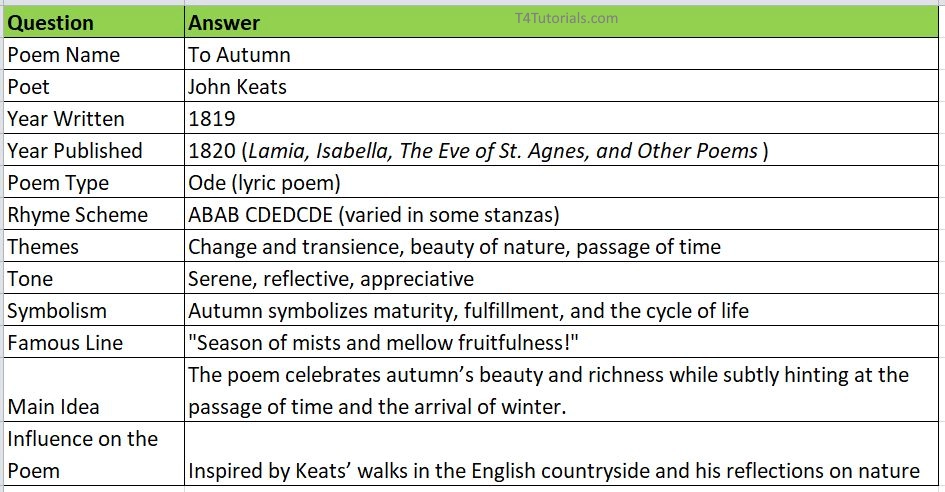
| Question | Answer |
| Poem Name | To Autumn |
| Poet | John Keats |
| Year Written | 1819 |
| Year Published | 1820 (Lamia, Isabella, The Eve of St. Agnes, and Other Poems) |
| Poem Type | Ode (lyric poem) |
| Rhyme Scheme | ABAB CDEDCDE (varied in some stanzas) |
| Themes | Change and transience, beauty of nature, passage of time |
| Tone | Serene, reflective, appreciative |
| Symbolism | Autumn symbolizes maturity, fulfillment, and the cycle of life |
| Famous Line | “Season of mists and mellow fruitfulness!” |
| Main Idea | The poem celebrates autumn’s beauty and richness while subtly hinting at the passage of time and the arrival of winter. |
| Influence on the Poem | Inspired by Keats’ walks in the English countryside and his reflections on nature |
1. : Who wrote the poem To Autumn?
(A) William Wordsworth
(B) John Keats
(C) Percy Bysshe Shelley
(D) Samuel Taylor Coleridge
2. : In which year was To Autumn written?
(A) 1817
(B) 1818
(C) 1819
(D) 1820
3. : When was the poem published?
(A) 1819
(B) 1820
(C) 1821
(D) 1825
4. : What is the central theme of the poem?
(A) The harshness of winter
(B) The beauty and abundance of autumn
(C) The sadness of lost love
(D) The power of human ambition
5. : How many stanzas are in To Autumn?
(A) Two
(B) Three
(C) Four
(D) Five
6. : What does autumn symbolize in the poem?
(A) The excitement of youth
(B) The cycle of life and maturity
(C) The arrival of war
(D) The unpredictability of nature
7. : What famous line opens the poem?
(A) “A thing of beauty is a joy forever.”
(B) “Thou wast not born for death, immortal Bird!”
(C) “Season of mists and mellow fruitfulness!”
(D) “Beauty is truth, truth beauty.”
8. : Which of the following is NOT mentioned in the poem?
(A) The ripening of fruit
(B) The buzzing of bees
(C) The sound of crickets
(D) The falling of snow
9. : What is the tone of the poem?
(A) Angry and rebellious
(B) Joyful and humorous
(C) Serene and reflective
(D) Dark and tragic
10. : What does Keats compare autumn to in the poem?
(A) A king ruling over the seasons
(B) A painter creating a masterpiece
(C) A harvester bringing in the crops
(D) A sleeping child dreaming of spring