Summary:
Hyperion is an unfinished epic poem by John Keats, written in 1818–1819. It tells the story of the fall of the Titans and the rise of the Olympian gods, drawing inspiration from Greek mythology. The poem begins with Saturn, the former ruler of the Titans, lamenting his defeat and loss of power. The other Titans, including Thea, Hyperion, and Oceanus, discuss their downfall and the emergence of a new order led by the Olympians. Hyperion, the god of the sun, remains undefeated and contemplates resisting the change, but he ultimately realizes that his time is ending. The poem explores themes of power, change, and the inevitable progression of time, using rich imagery and grand language. Keats abandoned Hyperion before completing it, but it remains one of his most ambitious works.
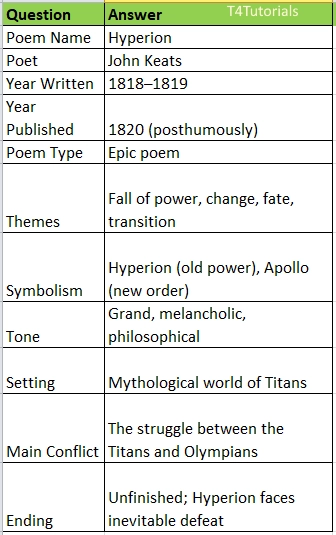
| Question | Answer |
| Poem Name | Hyperion |
| Poet | John Keats |
| Year Written | 1818–1819 |
| Year Published | 1820 (posthumously) |
| Poem Type | Epic poem |
| Themes | Fall of power, change, fate, transition |
| Symbolism | Hyperion (old power), Apollo (new order) |
| Tone | Grand, melancholic, philosophical |
| Setting | Mythological world of Titans |
| Main Conflict | The struggle between the Titans and Olympians |
| Ending | Unfinished; Hyperion faces inevitable defeat |
1. : Who is the central figure among the defeated Titans?
(A) Oceanus
(B) Saturn
(C) Apollo
(D) Zeus
2. : What does Hyperion symbolize in the poem?
(A) Wisdom and knowledge
(B) The resistance to change and old power
(C) The victory of the Olympians
(D) The beauty of nature
3. : Who is destined to replace Hyperion as the god of the sun?
(A) Zeus
(B) Saturn
(C) Apollo
(D) Hermes
4. : What is the main theme of the poem?
(A) The joy of ruling the world
(B) The inevitable change of power and progress
(C) The superiority of the Titans
(D) The dangers of ambition
5. : Why is Hyperion considered unfinished?
(A) Keats lost interest in the topic
(B) The manuscript was lost
(C) Keats abandoned it before completing
(D) It was banned from publication
6. : How does Oceanus respond to the fall of the Titans?
(A) He seeks revenge against the Olympians
(B) He accepts change as a natural process
(C) He tries to rally the Titans for another war
(D) He flees to another world
7. : What poetic style does Keats use in Hyperion?
(A) Spenserian stanza
(B) Blank verse
(C) Free verse
(D) Rhymed couplets
8. : What role does Thea play in the poem?
(A) She comforts Saturn in his downfall
(B) She helps Hyperion fight back
(C) She joins the Olympians
(D) She warns the Titans of their defeat
9. : What is the tone of the poem?
(A) Lighthearted and celebratory
(B) Grand and melancholic
(C) Satirical and humorous
(D) Optimistic and uplifting
10. : Why is Apollo significant in the poem?
(A) He is the new god of the sun, representing the future
(B) He defeats Saturn in battle
(C) He refuses to take power from Hyperion
(D) He brings peace between Titans and Olympians