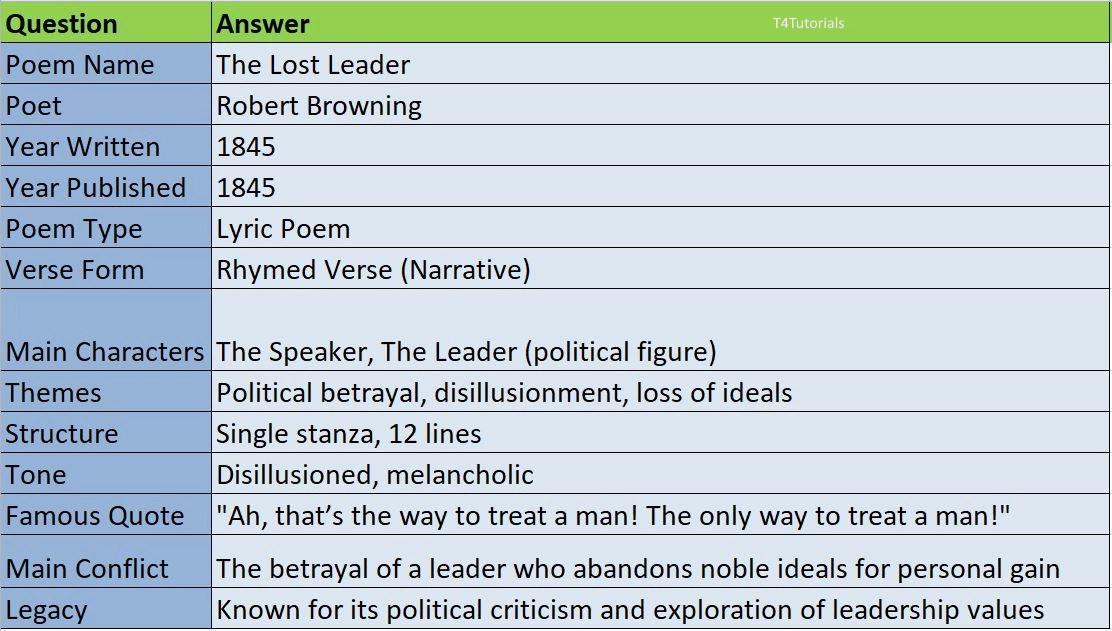
1. The Lost Leader is primarily about:
(A) A personal love affair
(B) A disillusionment with political betrayal
(C) The fall of an ancient civilization
(D) The loss of friendship
2. Who is the speaker in The Lost Leader addressing?
(A) A political leader who has betrayed their cause
(B) A lover who has broken their heart
(C) A fallen hero
(D) A general who has lost a war
3. Which of the following is a central theme in The Lost Leader?
(A) Love and romance
(B) Nature and beauty
(C) Political disillusionment and betrayal
(D) Courage in battle
4. What does the speaker regret in The Lost Leader?
(A) The leader’s loss of personal power
(B) The loss of the leader’s noble ideals
(C) The leader’s betrayal of their family
(D) The death of the leader
5. The title “The Lost Leader” refers to:
(A) A leader who has died
(B) A leader who has been exiled
(C) A leader who has been defeated in battle
(D) A leader who has abandoned their followers
6. What emotion does the speaker convey in The Lost Leader?
(A) Anger and betrayal
(B) Happiness and joy
(C) Peace and acceptance
(D) Indifference
7. In The Lost Leader, the speaker’s view of the leader is:
(A) Positive and admiring
(B) Indifferent and neutral
(C) Critical and disappointed
(D) Sympathetic and understanding
8. What does the speaker suggest is the result of the leader’s betrayal?
(A) The trust of the followers is permanently broken
(B) The leader will rise to power again
(C) The followers will remain loyal regardless
(D) The leader will face a heroic comeback
9. What does the speaker hope for in the conclusion of the poem?
(A) The leader’s redemption
(B) The followers will forgive the leader
(C) The leader will be punished for their betrayal
(D) The followers will find new ideals to follow
10. Which of the following best describes the tone of the poem?
(A) Cheerful
(B) Optimistic
(C) Melancholic and disillusioned
(D) Sarcastic
Summary:
The Lost Leader is a poem by Robert Browning that expresses the poet’s disillusionment with a prominent leader who has fallen from grace. The poem addresses the betrayal of idealism, loyalty, and integrity, reflecting Browning’s frustration with the political figures of his time. In this case, the speaker is disillusioned by the actions of a leader who once held noble values but has abandoned them for personal gain or compromise. The speaker laments the loss of the leader’s original ideals and reflects on the consequences of this loss, not just for the leader but for those who once followed him. The poem explores themes of betrayal, integrity, and the loss of trust in leadership.