
Summary:
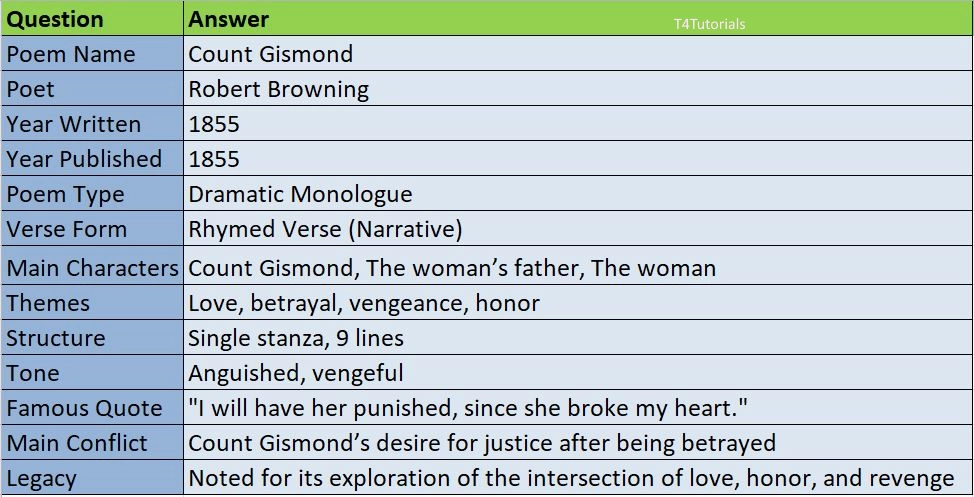
Count Gismond is a dramatic monologue by Robert Browning. The poem tells the story of a man, Count Gismond, who is confronting the tragic outcome of his romantic relationship with a woman who betrayed him. Gismond speaks to the woman’s father, revealing the story of his love, betrayal, and revenge. He had been wronged by the woman he loved, and now, in an act of justice and honor, he demands satisfaction. The poem explores themes of love, betrayal, vengeance, and honor. The Count, in his fierce commitment to justice and the protection of his pride, ultimately demands that the woman’s father give him the satisfaction he believes he deserves for the wrong done to him.
1. : Count Gismond is primarily about:
(A) A romantic relationship without complications
(B) A love triangle
(C) Love, betrayal, and vengeance
(D) A family reunion
2. : Who is Count Gismond speaking to in the poem?
(A) His lover
(B) The woman he is in love with
(C) The woman’s father
(D) His friend
3. : What is Count Gismond’s main motive in the poem?
(A) To win back the love of the woman
(B) To avenge the wrong done to him
(C) To confess his love for the woman
(D) To ask for forgiveness
4. : What emotion drives Count Gismond in the poem?
(A) Grief and sorrow
(B) Anger and a desire for revenge
(C) Love and affection
(D) Fear of confrontation
5. : What is the relationship between Count Gismond and the woman in the poem?
(A) They are strangers
(B) They are engaged, but she has betrayed him
(C) They are childhood friends
(D) They are married
6. : In Count Gismond, who has wronged Gismond?
(A) His own family
(B) The woman he loved
(C) The king
(D) A rival in battle
7. : What is Count Gismond’s attitude towards the woman’s betrayal?
(A) He is indifferent
(B) He is willing to forgive her
(C) He demands justice and vengeance
(D) He does not care about the betrayal
8. : What is the tone of the poem Count Gismond?
(A) Joyful and optimistic
(B) Anguished and vengeful
(C) Humorous and light-hearted
(D) Peaceful and calm
9. : What does Count Gismond expect from the woman’s father in the poem?
(A) An apology for the wrong done to him
(B) His daughter’s hand in marriage
(C) Satisfaction for the betrayal
(D) A promise to never see his daughter again
10. : What does Count Gismond explore in its themes?
(A) Political power
(B) Friendship and loyalty
(C) Love, betrayal, and vengeance
(D) Childhood and innocence