
Summary:
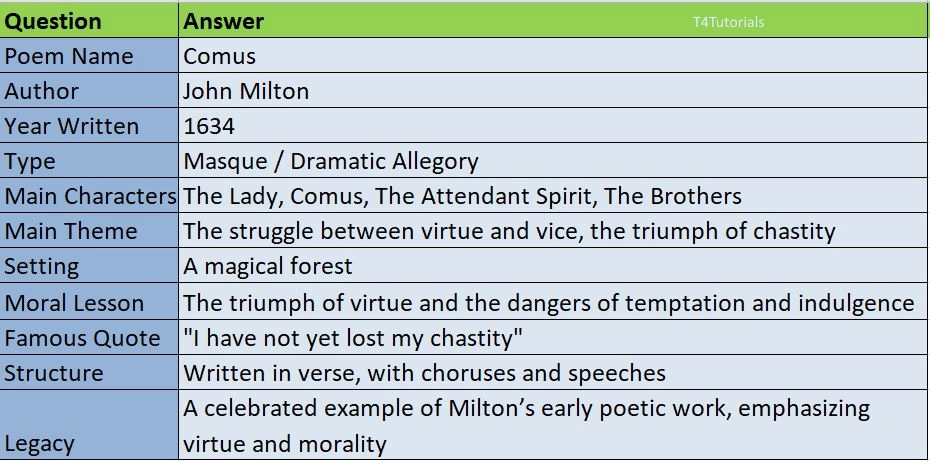
Comus is a masque written by John Milton in 1634. It is a dramatic allegory based on classical myth, celebrating the triumph of virtue and the preservation of innocence. The story follows a Lady, who is lost in a forest and is captured by Comus, the god of revelry and indulgence. Comus, with the help of his followers, tries to corrupt her with enchantments, tempting her into immoral behavior. However, the Lady’s virtue remains intact, aided by her faith and inner strength. Her brothers, with the help of the Attendant Spirit, rescue her, and the masque concludes with a celebration of chastity, the triumph of virtue over vice, and the moral lessons of temperance and self-control. Comus explores themes of temptation, the power of virtue, and the consequences of indulgence, as well as Milton’s belief in the importance of inner strength and reason.
1. : Who is the main antagonist in Comus?
(A) The Lady
(B) The Attendant Spirit
(C) Comus
(D) The Brothers
2. : What is the main theme of Comus?
(A) The power of revenge
(B) The struggle between virtue and vice
(C) The importance of wealth
(D) The downfall of a kingdom
3. : Who helps the Lady escape from Comus?
(A) The Brothers
(B) The Attendant Spirit
(C) Comus
(D) A forest spirit
4. : What does Comus attempt to do to the Lady?
(A) Turn her into a bird
(B) Enchant her and tempt her into immorality
(C) Make her his queen
(D) Trap her in a forest forever
5. : What does the Lady represent in Comus?
(A) Chastity and virtue
(B) Knowledge and wisdom
(C) Love and romance
(D) The power of temptation
6. : Where does the action of Comus take place?
(A) A palace
(B) A forest
(C) A city
(D) A temple
7. : What is Comus the god of in Comus?
(A) Love
(B) Temptation
(C) Revelry and indulgence
(D) War
8. : Who is the primary source of the Lady’s strength and resistance to temptation?
(A) Her brothers
(B) The Attendant Spirit
(C) Her knowledge of the scriptures
(D) Her physical strength
9. : What does the masque of Comus ultimately celebrate?
(A) The triumph of virtue over vice
(B) The power of wealth
(C) The joy of indulgence
(D) The revenge of the Lady
10. : What is the moral lesson of Comus?
(A) The importance of wealth and power
(B) The danger of temptation and indulgence
(C) The power of physical strength
(D) The value of revenge